Commercial cleaning and food hygiene professionals in Brampton assist restaurants, food centers, bakeries, warehouses, and mobile food services maintaining standards. They sanitize high-contact points, food contact areas, equipment, floors, drains, restrooms, and prep zones using certified products, maintaining proper ratios, and documenting contact times. You require regular sanitation based on hazard level, food throughput, allergens, and regulatory assessments, plus documented proof backing HACCP, audits, and public health compliance. The following information outlines what strong sanitation programs must contain.
Important Highlights
- Food safety cleaning professionals in Brampton serve restaurants, grocery departments, commissaries, warehouses, bakeries, schools, mobile vendors, and allergen-sensitive operations.
- High-touch surfaces, food-contact equipment, kitchens, floors, drains, restrooms, and storage areas are disinfected using compartmentalized approaches to avoid cross-contamination.
- Validation of proper chemical concentration, appropriateness, and contact time is completed by qualified vendors, with finalization filed using swabs, audits, and corrective-action records.
- Risk, production volume, format changes, spills, and standards should shape sanitation calendars, with regular, weekly, and annual duties assigned by zone.
- Select suppliers with hazard analysis knowledge, health regulatory, competency, WHMIS, preparation, coverage, endorsements, coded implements, and compliance-ready maintenance documentation.
Brampton Venues That Need Food Safety Cleaning: Which Ones?
Any Brampton facility that manages, stores, prepares, packages, or serves food needs sanitation protocols. You must implement it if your operation falls under public health review, food rules, or HACCP systems. That requirement covers food service venues, employee cafes, supply centers, retail departments, meat shops, fish areas, local stores, and institutional food prep areas.
Adherent sanitation standards remains needed in storage facilities, production centers, refrigerated warehouses, bakeries, school nutrition services, event spaces, and delivery hubs. Seasonal and mobile businesses are included, examples being catering trucks, festival vendors, and pop-up food booths. Your location needs written cleaning standards whenever your workers work with ingredients, section ready-to-serve foods, heat finished items, or maintain allergen storage. In Brampton, food safety is not optional; it comprises statutory, functional, and public health adherence.
Which Areas Do Brampton Cleaning Experts Cover?
You need cleaning experts who disinfect frequently contacted areas, kitchen areas, floors, and restrooms to meet food safety and public health standards. They target these areas because they present the highest risk for contamination spread, slipping risks, and sanitation breaches.
When you know their cleaning scope, you can verify that your facility's cleaning scope meets operational and regulatory requirements.
Sterilizing High-Touch Zones
implement a sterilization plan
by changing cloths, implementing sequential workflows, and keeping cleaning materials organized according to section
Cooking Zones, Walking Surfaces, and Restroom Environments
Expect Brampton cleaning experts to focus on kitchens, floors, and restrooms because each area carries distinct food safety, slip-and-fall, and public health risks. In industrial kitchens, you need grease removal from cooking stations, appliance surfaces, drain systems, preparation areas, and backsplashes to reduce bacterial growth and pest activity.
You should also expect documented floor care. is also provided as part of the service.
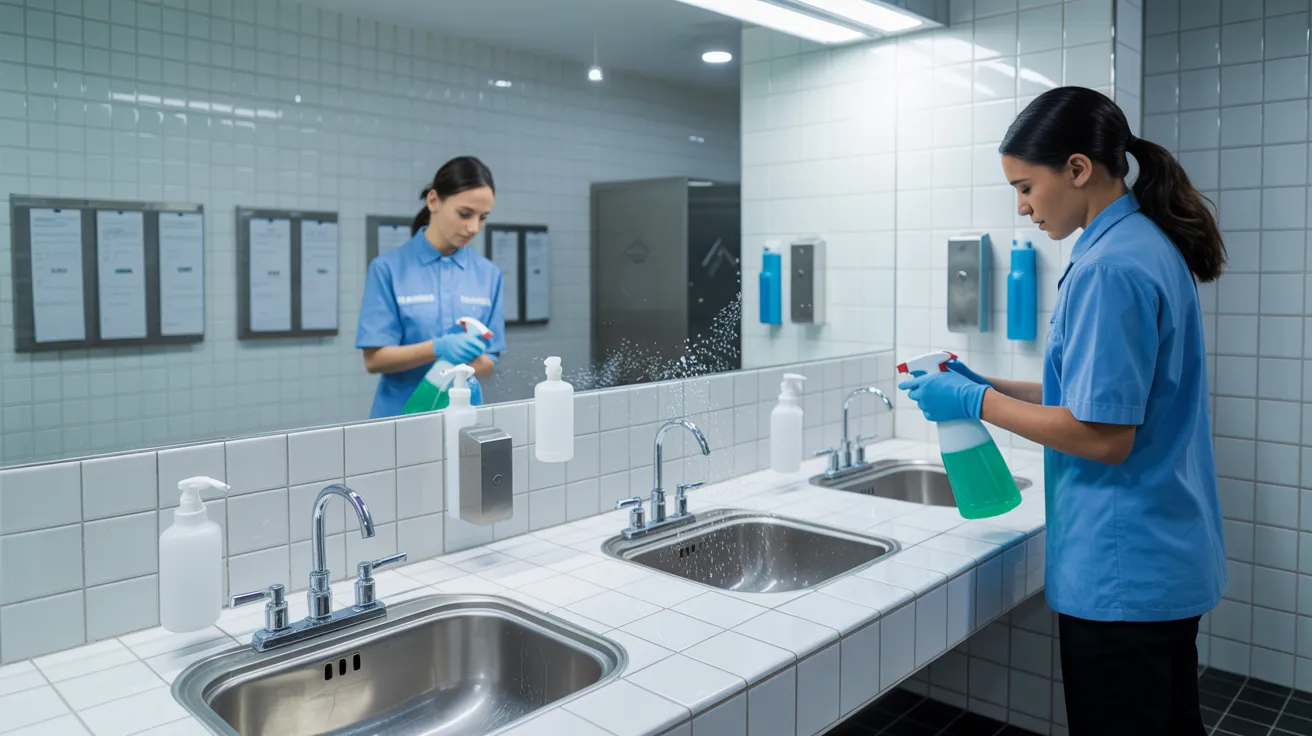
For restroom sanitation, cleaners disinfect high-touch surfaces, bathroom fixtures, stall dividers, supply dispensers, and trash receptacles, then replenish amenities and manage odor. They also maintain restaurant cleaning supply rooms where product storage, sink cleanliness, and drain systems impact daily sanitation standards and worker protection.
The Importance of Food Safety Cleaning in Brampton
Brampton facilities require proper hygiene standards to meet compliance obligations and pass audits. You also minimize bacterial spread through proper cleaning of food-preparation surfaces, appliances, and frequently-touched items. Most importantly, you safeguard public health by lowering the risk of foodborne illness in your facility.
Health Code Compliance
Since Brampton food companies must follow mandatory safety protocols, your hygiene maintenance directly influences your capacity to satisfy health codes, safeguard diners, and sidestep regulatory penalties. You must maintain hygienic food handling zones, documented cleaning schedules, safe chemical management, and traceable training practices that correspond to municipal and provincial inspection expectations.
Detailed hygiene logs aid you in showing due diligence during inspection audits and confirming your practices follow reliable patterns that are consistent and documented.
Cross-Contamination Prevention
Meeting regulatory requirements also depends on your ability to prevent cross-contamination during daily food handling and cleaning. You must separate raw ingredients from ready-to-eat foods, clean work areas after each use, and store chemicals away from food-contact items. Established guidelines minimize contamination chances and support consistent compliance during inspections.
Building allergen isolation prevents priority allergens from contacting common workstations, storage, or apparatus. Leverage separate cutting boards, colored implements, and strict utensil labeling so team members won't blend products in cooking or serving.Enforce handwashing after handling uncooked meats, shellfish, egg items, or allergen substances. Swap wiping cloths regularly, and confirm disinfectant efficacy using test strips. When you train staff to follow these controls every shift, you foster a cleaner, more secure operation that meets Brampton's food safety expectations consistently.
Public Health Defense
When food safety cleaning breaks down, you don't just face inspection failure—you heighten the likelihood of food-related sickness affecting customers, staff, and the wider Brampton community. You also undermine your responsibility in protecting public health, especially in busy food facilities where contamination can spread quickly through surfaces, equipment, and touchpoints.
You need cleaning protocols that remove soils, sanitize correctly, and confirm effectiveness. That requires adhering to contact times, using approved disinfectants, documenting schedules, and training staff to meet health-unit expectations. These measures facilitate pathogen reduction by reducing pathogens before they contaminate surfaces or food. In Brampton, strong sanitation protects vulnerable populations, prevents disease spread, and helps you demonstrate due diligence. When you clean to standard, you don't just meet regulations—you actively reduce risk and support safer food service citywide.
How Can Cleaning Practices Ensure Food Safety Compliance?
Maintaining rigorous cleaning routines promotes food safety compliance by lowering contamination exposure, controlling pathogen growth, and keeping your facility in accordance with sanitation requirements under HACCP-based programs and public health regulations. You ensure that product-contact areas stay visibly clean and microbiologically controlled, facilitating documented preventive controls and inspection readiness.
Effective cleaning also strengthens allergen prevention by eliminating residues that can trigger undeclared allergen exposure. by removing residues that can provoke undeclared allergen exposure.
How Should You Schedule Commercial Cleaning Services?
You'll get the best results from cleaning schedules that incorporate risk levels, output volume, and legal mandates rather than a rigid calendar system alone.
Regular tasks should be scheduled separately
Finding Quality Brampton Cleaning Experts: A Guide
Screen providers initially by their food hygiene standards—not budget alone. You need to verify that every company meets CFIA, public health, and HACCP standards for your operation. Demand proof of insurance, WHMIS compliance, training records, and management systems. Evaluate technician understanding of cross-contamination risks, chemical safety, and documented sanitation practices.
You should also assess operational reliability and accountability. Request references from Brampton food businesses, then examine response times, corrective-action procedures, and communication standards. Confirm the company participates in supplier audits and can present inspection-ready documentation when regulators or third parties request evidence. Check whether equipment is maintained is performed, color-coded implements are used appropriately, and site-specific hazards are recognized. A qualified provider protects regulatory adherence, product integrity, and your brand reputation.
What details should a Food Safety Cleaning Plan include?
Write out a framework that outlines every sanitation task, standard, and responsibility before production begins. You should include cleaning schedules, approved products, ratios, contact periods, tools, and validation approaches for each zone, surface, and piece of equipment. Remember to add pre-operational inspections, corrective actions, and employee training requirements.
Your strategy should also tackle prevention of check article contamination, waste management, pest-control tactics, and scheduled records for restrooms, drains, floors, and food-contact areas. Specify how you'll separate raw and ready-to-eat processes, facilitate ingredient tracking, and maintain accurate allergen labeling through validated cleaning between product changes. You should assign accountability, document signed records, and evaluate results against regulatory standards, HACCP controls, and customer requirements. When gaps appear, update procedures immediately and retrain staff.
Frequently Posed Questions about the Plan
Can cleaning services support overnight shifts in Brampton facilities?
Yes, you can set up cleaning services to manage nighttime operations in Brampton facilities. You'll manage overnight sanitation around operational windows, access requirements, and personnel requirements. Providers generally establish overnight procedures to minimize interruption, maintain standards, and document finished tasks. You should verify response times, oversight, lockout protocols, and disposal methods before service starts.
Can Brampton cleaning experts manage emergency spill response?
Yes, you can find many Brampton sanitation experts offering emergency response options. They handle contamination, assess dangers, isolate zones, and execute rapid cleanup to minimize risk and limit operational impact. You should verify response times, certifications, protocols, and disposal methods. If your facility must meet standards, choose a service that logs events, follows procedures, and supports audits.
Are green disinfectants appropriate for surfaces contacting food?
Definitely, green disinfectants operate safely on food preparation areas if you purchase items marked food-safe that comply with regulatory requirements. You must confirm contact duration, mixing proportions, and rinse procedures in advance of use. Plant-derived products lower toxic chemical contact, but you need demonstration of efficacy against relevant pathogens. To keep surfaces residue-free, follow exact manufacturer guidelines and ensure your sanitizer adheres to applicable food industry sanitation standards.
Can cleaning plans be customized for seasonal variations?
Absolutely, maintenance plans allow customization for seasonal production changes. Modify timing, staff levels, disinfectants, and confirmation procedures to match seasonal patterns while maintaining regulatory compliance. Reduce production interruptions through timing sanitization surrounding line changes, peak seasons, and usage cycles. Additionally update SSOPs, staff education, and environmental testing to account for seasonal hazards, new allergens, or higher contamination levels. Ongoing evaluations ensure the schedule effective.
Will commercial cleaners teach your staff on hygiene best practices?
Indeed, commercial cleaning providers typically provide staff training on proper hygiene. Your team obtains training on proper chemical use, contact times, preventing cross-contamination, equipment disassembly, and documentation. They typically follow training with HACCP, GMP, and CFIA or regional health standards requirements. Many also execute compliance inspections to verify compliance, reveal issues, and strengthen improvement measures. This supports you in maintain consistent procedures, achieve compliance, and decrease foodborne illness risks each day.
Closing Remarks
Partnering with Brampton commercial cleaning and food safety professionals means more than cleaning—it guarantees your operation stays inspection-compliant and your protocols are defensible. From processing facilities to kitchens, each cleaned area and maintained corner reduces health hazards and avoids costly disruptions. By scheduling maintenance on appropriate schedules and executing a comprehensive cleaning strategy, you shield your workforce, clients, and your reputation. In a heavily regulated sector, sanitary conditions are non-negotiable—they're critical to business success.